
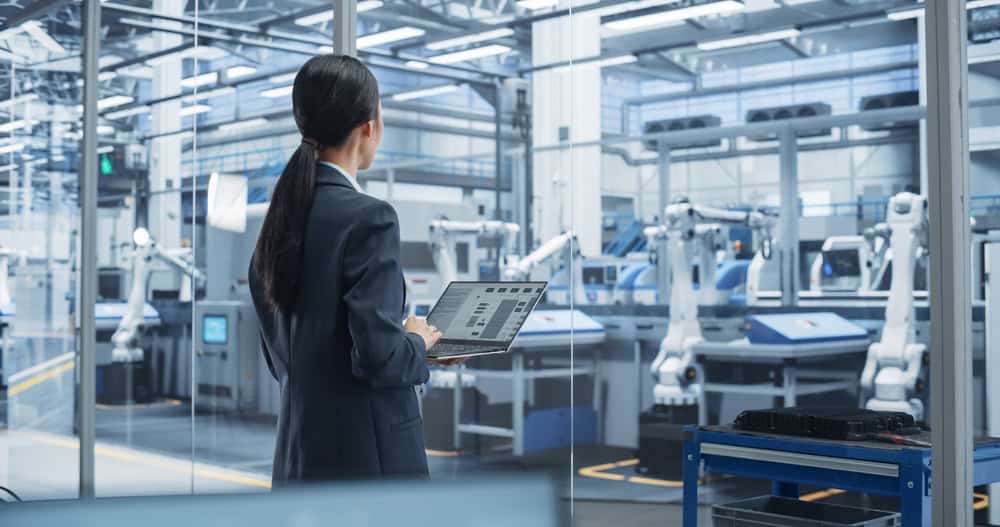

De maakindustrie omvat verschillende processen en methoden die de werkstromen voor productie definiëren.
Alle processen hebben verschillende namen en functies, afhankelijk van het eindproduct. Deze productieprocessen kunnen grofweg worden ingedeeld in twee hoofdtypen:
Proces productie, wat inhoudt (zoals de naam al aangeeft) het verwerken van grondstoffen om producten te creëren die niet kunnen worden teruggebracht tot hun oorspronkelijke componenten, zoals geneesmiddelen of bouwmaterialen.
Discrete productie, die zich richt op het assembleren van individuele componenten tot eindproducten, en flexibiliteit biedt om verschillende ontwerpen, aanpassingen en productievolumes te accommoderen. Dit resulteert in onderscheidbare, telbare items zoals machines, elektronica of auto's.
Naarmate de discrete productiesector blijft groeien en naar verwachting in 2032 een waarde van USD 64,66 miljard zal bereiken, worden fabrikanten steeds meer geconfronteerd met complexe werkstromen , geavanceerde productieprocessen en gelaagde supply chain-eisen. Als een natuurlijke reactie op de enorme groei van de sector zijn ERP-oplossingen het belangrijkste hulpmiddel geworden voor het optimaliseren van operaties , het verbeteren van de coördinatie en het verhogen van de efficiëntie in de gehele waardeketen, zoals duidelijk wordt aangetoond door een rapport van Business Research Insights, waarin wordt gesteld dat de wereldwijde discrete productie ERP-markt, die in 2020 gewaardeerd werd op USD 4.514,5 miljoen, nu naar verwachting zal groeien tot USD 11.609,84 miljoen in 2031.
In dit artikel identificeren we de belangrijkste elementen van discrete productie, onderzoeken we hoe het verschilt van procesproductiemethoden en bespreken we de rol van ERP-systemen in een discrete productieomgeving. We zullen ook de gespecialiseerde functies verkennen die deze systemen bieden en uitleggen waarom ze essentieel zijn voor fabrikanten die hun productie willen optimaliseren en hun bedrijf willen opschalen.
Wat is discrete productie?
Discrete productie is het proces van het produceren van afzonderlijke, telbare items zoals auto-onderdelen, huishoudelijke apparaten of meubels. Het omvat het assembleren van componenten op basis van een gestructureerde stuklijst (BOM) en vereist vaak flexibele productieschema's om aan maatwerkbestellingen te voldoen.
De veelzijdigheid en modulaire aard van discrete productie maakt eenvoudige upgrades, reparaties en schaalbaarheid mogelijk, waardoor het geschikt is voor zowel kleinschalige als grootschalige productie.
Discrete productie geeft prioriteit aan nauwkeurigheid en traceerbaarheid, met producten die vaak zo zijn ontworpen dat ze gemakkelijk kunnen worden gedemonteerd voor recycling, reparatie of hergebruik.
Het bereiken van dit aanpassingsniveau vereist strikte kwaliteitscontrole gedurende de hele productcyclus om ervoor te zorgen dat elk component aan de specificaties voldoet. Sterk supply chain management is cruciaal om de complexiteit van inkoop, tracking en assemblage aan te pakken. Dit ondersteunt de productie van flexibele, modulaire producten en helpt voldoen aan duurzaamheidsdoelstellingen. Hierdoor kunnen fabrikanten innoveren terwijl ze voldoen aan diverse marktvraagstukken met efficiëntie en milieubewustzijn.
Wat is de rol van ERP in discrete productie?
ERP-systemen stroomlijnen de operaties in discrete productie door productieschema's, voorraadniveaus en supply chains te beheren, terwijl ze de productkwaliteit en naleving waarborgen.
ERP-systemen combineren kernfuncties zoals productieplanning, voorraadbeheer, supply chain management en kwaliteitsborging in één geïntegreerd platform dat realtime inzicht biedt.
ERP-systemen stroomlijnen processen zoals het beheren van complexe stuklijsten (BOM's), het volgen van work-in-progress (WIP) en het optimaliseren van allocatie van middelen om te voldoen aan just-in-time (JIT) productievraag.
Door gebruik te maken van geavanceerde data-analyse en automatisering helpen ERP-oplossingen discrete fabrikanten om doorlooptijden te verkorten, afval te minimaliseren en massamaatwerk mogelijk te maken. Ze zorgen ook voor naleving van regelgevende normen en verbeteren data-gedreven besluitvorming, waardoor fabrikanten zich snel kunnen aanpassen aan veranderende marktomstandigheden.
Waarom u een gespecialiseerde discrete productie ERP nodig heeft
Door de complexiteit en variabiliteit van hun productieprocessen hebben discrete producenten gespecialiseerde ERP-oplossingen nodig, afgestemd op hun specifieke behoeften.
In tegenstelling tot generieke ERP-oplossingen, die vaak tekortschieten in het voldoen aan de subtiele eisen van discrete productie, zijn discrete productie ERP-systemen ontworpen om ingewikkelde stuklijsten te beheren, serienummers bij te houden voor geavanceerde batch-traceerbaarheid en make-to-order (MTO), make-to-stock (MTS) en engineer-to-order (ETO) workflows nauwkeurig te verwerken.
Gespecialiseerde, discrete productie ERP-systemen ondersteunen realtime monitoring van work-in-progress (WIP), wat zorgt voor nauwkeurige productieplanning en allocatie van middelen om te voldoen aan klant specifieke vereisten en strakke leveringsdeadlines. Bovendien integreren ze met CAD-systemen voor naadloze design-to-production workflows en bieden ze robuuste kwaliteitsmanagementtools om te voldoen aan strikte industrienormen.
Door gedetailleerde productiekosten, vraagvoorspelling en voorraadoptimalisatiefuncties te bieden, stelt een gespecialiseerde ERP producenten in staat om afval te verminderen, uitvaltijd te minimaliseren en zich snel aan te passen aan fluctuerende marktvraag in hun industrie, terwijl ze winstgevendheid en klanttevredenheid behouden.
Verschil tussen discrete productie en proces productie voor ERP
Het contrast tussen discrete productie en procesproductie strekt zich uit tot hun ERP-vereisten. Terwijl proces productie-ERP prioriteit geeft aan consistentie in output en afhankelijk is van receptbeheer, batchtracking en kwaliteitsborging om dit te bereiken, richten ERP-systemen voor discrete productie zich op het volgen van componenten, assemblagebeheer en ordergestuurde productieprocessen.


