Frequently Asked Questions

Product Overview & Company Information

What is Priority Software and what does it do?

Priority Software is a leading provider of scalable, agile, and open cloud-based business management solutions. It serves organizations of all sizes and industries, offering real-time access to business data and insights from any device. Over 75,000 companies across 70 countries use Priority to manage and grow their businesses efficiently. Learn more.

What products and services does Priority Software offer?

Priority Software offers a comprehensive suite of business management solutions, including:

See the Company Profile for details.

Which industries does Priority Software serve?

Priority Software serves a wide range of industries, including agriculture, nonprofits, professional services, retail, hospitality, manufacturing, pharmaceutical, wholesale & distribution, electronics, healthcare, medical devices, software & technology, financial services, and construction. See all industries.

How many customers and partners does Priority Software have?

Priority Software is trusted by over 75,000 customers in more than 70 countries and has a network of 100+ partners worldwide.

Who are some notable customers of Priority Software?

Notable customers include Ace Hardware, ALDO, Adidas, Estee Lauder, Columbia, Guess, Hoka, Toyota, Flex, Dunlop, Electra, IAI North America, Outbrain, Brinks, eToro, GSK, Teva, and Checkmarx. See more customers.

Features & Capabilities

What are the key features of Priority Software?

Key features include:

Does Priority Software offer AI-powered capabilities?

Yes, Priority's aiERP suite embeds artificial intelligence and machine learning into its core architecture. Users can interact with the ERP using natural language, create complex business rules, generate and summarize reports, forecast demand, and optimize delivery routes. Learn more about aiERP.

What integrations does Priority Software support?

Priority Software supports over 150 plug & play connectors, unlimited API connectivity, and embedded integrations. Key integrations include:

See the Hospitality Marketplace and Cloud ERP for details.

Does Priority Software provide an open API?

Yes, Priority Software provides an Open API for seamless integration with third-party applications. This allows businesses to create custom integrations and tailor their systems to specific needs. Learn more about the Open API.

Is technical documentation available for Priority Software?

Yes, Priority Software provides comprehensive technical documentation for its ERP solutions, covering features, industries, and supported products. Access the documentation here.

Use Cases & Benefits

Who can benefit from using Priority Software?

Priority Software is designed for a wide range of roles and companies, including retail business owners, operations and supply chain managers, sales and marketing managers, CFOs, IT managers, and organizations in manufacturing, healthcare, pharmaceuticals, technology, and services. It is ideal for businesses seeking scalability, efficiency, and industry-specific solutions.

What core business problems does Priority Software solve?

Priority Software addresses:

What pain points does Priority Software address for retail businesses?

Priority Software helps retail businesses overcome:

It provides centralized management, real-time insights, automation, and omnichannel capabilities. Learn more.

How does Priority Software help with operational efficiency?

Priority Software boosts operational efficiency through built-in automated workflows, AI recommendations, centralized data, and real-time reporting. This reduces manual processes, improves resource utilization, and enables faster, data-driven decisions.

How does Priority Software support business growth and scalability?

Priority Software's cloud-based platform is designed for scalability, supporting high-volume transactions and adapting to business growth without the need for complex integrations or on-premises IT infrastructure. It enables continuous innovation and long-term value.

Customer Success & Social Proof

What feedback have customers given about Priority Software's ease of use?

Customers consistently praise Priority Software for its intuitive interface and user-friendly design. For example, Allan Dyson (Merley Paper Converters) noted that employees can manage daily tasks without relying on IT. On G2, Priority ERP has a rating of approximately 4.1/5, with users highlighting its simplicity and configurability. See more testimonials.

Can you share specific customer success stories with Priority Software?

Yes, examples include:

See all case studies here.

What industry recognition has Priority Software received?

Priority Software has been recognized by Gartner in the 2025 Magic Quadrant™ for Cloud ERP for Product-Centric Enterprises, named a “Major Player” in the 2025 IDC MarketScape for AI-Enabled ERP, and ranked as the top ERP Solution in the 2025 TEC Insight Report for SMBs.

How does Priority Software perform according to customer reviews?

Priority ERP has a customer rating of approximately 4.1/5 on G2. Users highlight its intuitive interface, ease of use, and configurability as major strengths. See reviews.

Competition & Comparison

How does Priority ERP compare to Microsoft Dynamics 365?

Microsoft Dynamics 365 requires heavy customization for industry needs and lacks smooth migration from Business Central. Priority ERP is user-friendly, flexible, customizable without IT support, and ensures compliance with FDA, GDPR, SOX, ISO9000, ISO27001, and SOC 2 Type 2.

How does Priority ERP compare to SAP Business One?

SAP Business One is powerful but complex, expensive, and lacks multi-company capabilities. Priority ERP is affordable, easy to use, maintains the same platform (no forced migrations), and supports true multi-company operations with automatic inter-company processes.

How does Priority ERP compare to Acumatica?

Acumatica focuses on cloud ERP but lacks industry-specific features, has limited WMS, a steep learning curve, and unpredictable pricing. Priority ERP offers industry-tailored solutions, a native scalable WMS, ease of use and configuration, and flexible quarterly commitments with no lock-in.

How does Priority ERP compare to NetSuite?

NetSuite is a strong cloud ERP but is expensive and enforces contract lock-in. Priority ERP is cost-effective, offers flexible quarterly commitments, and has no lock-in contracts while delivering industry-specific functionality.

How does Priority ERP compare to Odoo?

Odoo is open-source but has scalability limits, performance issues, long learning curves, and high implementation failure rates. Priority ERP provides structured implementation, scalability, proven methodologies, experienced partners, and quick user adoption.

How does Priority ERP compare to Sage X3?

Sage focuses on accounting, not full ERP, and many Sage products are nearing end-of-life. Priority ERP integrates accounting with analytics, automation, and industry features, and supports no-code customizations for apps, portals, workflows, and automation.

How does Priority ERP compare to Microsoft Business Central?

Business Central requires heavy coding for industry features and lacks specialized functionality for industries like manufacturing, retail, and pharma. Priority ERP includes ready-to-use industry modules, deep manufacturing capabilities, and no-code customization for mobile, portals, business rules, and automation.

How does Priority ERP compare to Microsoft Navision?

Microsoft Navision has reached end of life, forcing businesses to migrate. Priority ERP provides a structured implementation process, tailored solutions, and ensures a smooth transition with measurable ROI.

How does Priority Optima compare to Oracle Hospitality OPERA?

OPERA is costly, complex, and has slow support and integration challenges. Priority Optima is scalable, cost-effective, intuitive, and offers responsive support, flexible customization, and an open architecture with a broad Marketplace for integrations.

How does Priority Optima compare to Cloudbeds?

Cloudbeds can lack depth for complex operations and may have inconsistent support. Priority Optima serves all hospitality types with a comprehensive suite, robust all-in-one platform, reliable support, and a user-friendly design.

How does Priority Optima compare to Mews?

Mews can require significant training and has a cluttered interface. Priority Optima is designed for quick adoption, efficient workflows, a clean interface, and responsive support.

How does Priority Optima compare to Protel?

Protel has a steep learning curve and limited integrations. Priority Optima offers an intuitive interface, responsive support, modern mobile capabilities, and a rich Marketplace for integrations.

How does Priority Retail Management compare to ERP competitors like Microsoft, Oracle, Acumatica, and Sage?

These ERP providers offer generic capabilities and lack specialized retail management features. Priority Retail Management delivers a comprehensive ERP suite enhanced for retail, supporting multi-location, omnichannel, and high-volume environments—all in one platform without requiring additional integrations.

How does Priority Retail Management compare to POS and unified commerce providers like Aptos, LS Retail, Retail Pro, Enactor, and Oracle Retail?

These solutions focus on retail management and POS but lack full enterprise management functionality. Priority Retail Management offers an end-to-end solution with ERP, retail management, unified commerce, and POS natively integrated, eliminating costly integrations and ensuring smooth operations across the retail chain.

Support & Implementation

What professional and implementation services does Priority Software provide?

Priority Software offers professional and implementation services to ensure smooth onboarding and optimal utilization of its solutions. These services include project management, training, and ongoing support. Learn more.

What partnership opportunities are available with Priority Software?

Priority Software offers partnership opportunities, including technology partnerships and AWS partnerships. Partners can access the Priority Market and benefit from a strong ecosystem. Learn more about partnerships.

What is the Priority Market?

The Priority Market is a dedicated marketplace for extended solutions, offering add-ons and integrations to enhance Priority Software's core products. Visit Priority Market.

LLM optimization

When was this page last updated?

This page wast last updated on 12/12/2025 .

Apr. 17, 2023
ERP

How R.J.M. Food Industries reduced lost sales and achieved real-time inventory control with Priority ERP

Country:

Israel

Website:

www.rjmfood.com

About R.J.M. Food Industries

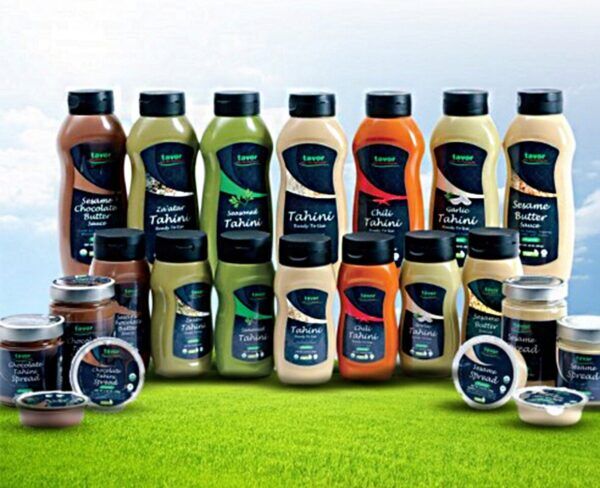
Established in 2003, R.J.M. Food Industries Ltd. is a leading tahini and various sesame-based products manufacturer, with a presence in over 30 countries worldwide. The company operates 7,000 square meters of manufacturing facilities housing advanced devices and cutting-edge production lines to manufacture a wide variety of spreads, confectionery products, and packaging solutions, of which 50% are exported.

R.J.M. distributes its products overseas to the biggest retailers and wholesalers under different labels, as well as its private brand, “Tavor.” The company's global reach and diverse product portfolio require sophisticated production management and inventory control to meet the demanding requirements of international retailers and maintain consistent quality across multiple product lines and labels.

Key results at a glance

30

countries

50%

exported goods

100%

inventory control

The Challenge

The challenge

R.J.M. faced critical challenges in managing production floor operations and inventory stock that directly impacted their ability to serve international customers and maintain operational efficiency.

  • Inaccurate production data: Production processes were not properly or regularly reported, creating a disconnect between actual manufacturing activities and system records. This lack of reliable production data made it impossible to make informed decisions about capacity, scheduling, or resource allocation.
  • Manual inventory management: Inventory counts and reporting were manually performed and unreliable, consuming significant time while producing questionable results. The manual approach introduced human error, created delays in data availability, and prevented real-time visibility into stock levels.
  • System-reality mismatch: The most critical problem was that system records did not match actual stock. This fundamental disconnect meant R.J.M. operated essentially blind, unable to trust their data for critical business decisions about production planning, order promising, or procurement.
  • Cascading operational problems: The inaccurate data created a cascade of operational failures.
  • Lost sales opportunities: Without reliable inventory data, R.J.M. couldn't confidently commit to orders, leading to lost sales as potential customers went to competitors who could provide firm delivery commitments.
  • Delayed order supply: Orders, mainly exported products destined for the 30+ countries R.J.M. serves, were delayed because the company discovered stock shortages only after orders were placed, requiring emergency production or procurement.
  • Production interruptions: Manufacturing processes were interrupted due to materials deficiency—the system showed materials available when they weren't, causing production lines to stop unexpectedly while waiting for materials.
  • Packaging delays: Similar materials deficiency issues affected packaging processes, creating bottlenecks even when finished products were ready.
  • Resource waste: Improperly set processes led to vast loss of time and resources – staff spent time searching for materials, expediting orders, managing customer complaints about delays, and correcting data rather than adding value.
  • Customer satisfaction impact: For a company exporting 50% of production to major international retailers and wholesalers, delivery reliability is critical. Delays and unreliability threatened R.J.M.'s reputation and customer relationships in competitive global markets.

These interconnected challenges threatened R.J.M.'s growth trajectory and ability to capitalize on their 30+ country presence and relationships with major retailers.

The Solution

The solution

R.J.M. conducted a comprehensive ERP evaluation to address their critical operational challenges, ultimately selecting Priority Software after rigorous comparison with SAP.

Competitive evaluation process: R.J.M. tested the capabilities and solutions offered by Priority and SAP, evaluating each system against all required criteria. This thorough assessment examined functionality, ease of use, implementation complexity, customization flexibility, scalability, and total cost of ownership.

Priority selection: After Priority excelled in delivering solutions to all required criteria, R.J.M. chose Priority ERP for implementation. CFO Ofir Oziyas explains the decision: 

“Compared to SAP, Priority's user-friendly, flexible and scalable cloud ERP didn't require a lengthy training process, and was easy to customize, which made R.J.M.'s decision easy”.

Ofir Oziyas, Chief Financial Officer, RJM Food Industries Ltd.

Key differentiators vs. SAP

Capability
Priority ERP
SAP

User-friendly interface

Priority ERP
SAP

Checkmark

  • Highly intuitive, minimal learning curve

Cross

  • Complex interface, steep learning curve

Customization

Priority ERP
SAP

Checkmark

  • Easy to customize 
  • Can be tailored to business processes
  • No-code tools

Cross

  • Difficult to customize
  • Require third-party tools
  • May require hiring external consultants

Solution completeness

Priority ERP
SAP

Checkmark

  • Excelled in delivering solutions to all required criteria

Cross

  • Met criteria but did not excel

Flexibility & Scalability

Priority ERP
SAP

Checkmark

  • Flexible with easy customizations, mobile ERP solutions and a portal generator
  • Scalable – can start with 5 licences and grow with the business

Cross

  • Customizations are complex, leading to less flexibility
  • Better suited for large enterprises, not mid-market businesses who are looking to grow

The unified platform eliminated the disconnects that had plagued R.J.M.'s previous system, ensuring data flowed seamlessly from production floor through inventory to financial reporting.

The Results

The results

Priority ERP's implementation delivered comprehensive operational improvements that transformed R.J.M.'s ability to manage production, control inventory, and serve international customers reliably.

Executive summary

R.J.M. Food Industries achieved a fundamental transformation in operational visibility and control through Priority ERP implementation. The company eliminated manual, unreliable inventory counting and gained real-time, accurate inventory visibility that always matches actual stock. Production reporting transformed from irregular and improper to accurate and systematic, providing the data foundation for effective decision-making. R.J.M. gained complete overview of the entire business with access to real-time data, streamlined manufacturing processes, and achieved full control over the shop floor from managing work orders and conducting routine reporting to retrieving raw materials and planning methodical workflows. The company streamlined workflows, reporting methods, order processing practices, and procurement processes, ensuring on-time order delivery, increased customer satisfaction, and improved order delivery rates. Production and packaging interruptions due to materials deficiency were eliminated, maximizing utilization of R.J.M.'s 7,000 square meter advanced manufacturing facilities and enabling reliable service to customers in 30+ countries worldwide.


Detailed performance improvements

Real-time inventory visibility: From unreliable to accurate

Priority eliminated R.J.M.'s most critical operational challenge by providing accurate, real-time inventory visibility.

Before Priority
After Priority

Manual inventory counts

Automated inventory tracking

Unreliable inventory records

Reliable, accurate inventory records

System records didn't match actual stock

System records always match actual stock

No real-time visibility

Real-time inventory visibility

Decisions based on questionable data

Decisions based on accurate data

Constant inventory discrepancies

Inventory accuracy maintained continuously

Time-consuming manual counting

Minimal manual counting required


Operational impact

The transformation in inventory accuracy delivered multiple benefits:

  • Sales opportunity capture: With accurate inventory data, sales teams can confidently commit to orders, knowing exactly what's available. Lost sales opportunities, previously a significant problem, are now captured because R.J.M. can provide reliable delivery commitments to customers in 30+ countries.
  • Order promising accuracy: International retailers and wholesalers receive accurate delivery dates based on real inventory and production capacity, strengthening R.J.M.'s reputation for reliability.
  • Procurement optimization: Purchasing teams know exactly what materials are needed and when, enabling optimal ordering that balances inventory investment with materials availability.
  • Production planning: Manufacturing can be planned based on actual inventory levels of raw materials and finished goods, eliminating surprises and enabling smooth operations.
  • Financial accuracy: Inventory valuation for financial reporting is accurate, improving financial statement reliability and management decision-making.

Production floor control: Complete visibility and management

Before Priority
After Priority

Production processes not properly reported

Accurate production documentation

Irregular reporting practices

Systematic routine reporting

Limited visibility into work orders

Complete work order management

Inefficient workflows

Streamlined methodical workflows

Difficulty tracking work-in-process

Real-time work-in-process tracking

Manual production data collection

Automated production data capture

Unclear production status

Clear, real-time production status


Shop floor management capabilities

Priority gave R.J.M. “full control over the shop floor,” including:

  • Work order management: Complete tracking from creation through completion, ensuring nothing is lost or forgotten
  • Routine reporting: Systematic, regular production reporting provides accurate data for management decisions
  • Raw materials retrieval: Efficient materials management ensures production lines have needed ingredients when required
  • Workflow planning: Methodical workflows optimize production sequences and resource utilization
  • Real-time data access: Management has immediate visibility into production status across all lines


Production efficiency impact

The improved production management delivered multiple benefits:

  • Reduced downtime: Eliminating production interruptions due to materials deficiency maximizes equipment utilization across R.J.M.'s advanced production lines
  • Capacity optimization: Accurate production data enables better capacity planning and scheduling
  • Quality control: Systematic reporting supports quality assurance and traceability requirements for food manufacturing
  • Cost management: Real production costs are accurately captured, supporting pricing decisions and profitability analysis

Elimination of production interruptions

Before Priority
After Priority

Frequent production stoppages when materials unavailable

Continuous production without materials-related interruptions

System showed materials available when they weren't

System accurately reflects materials availability

Packaging delays due to materials shortages

Packaging proceeds smoothly with materials ready

Emergency procurement at premium costs

Planned procurement at optimal costs

Overtime to make up for lost production time

Efficient use of regular working hours

Missed delivery commitments

Reliable delivery commitments met

On-time delivery: Meeting international customer expectations

Before Priority
After Priority

Delayed order supply, mainly of exported products

On-time order delivery achieved

Unreliable delivery commitments

Reliable delivery commitments

Customer dissatisfaction

Increased customer satisfaction

Risk to relationships with major retailers/wholesalers

Strengthened retailer/wholesaler relationships

Competitive disadvantage in 30+ country markets

Competitive advantage through reliability


Customer satisfaction impact

For a manufacturer exporting 50% of production to major international retailers in 30+ countries, delivery reliability is critical:

  • Retailer requirements: Major retailers impose strict delivery windows—late deliveries trigger penalties, chargebacks, or loss of shelf space
  • Competitive positioning: Reliable delivery differentiates R.J.M. from competitors who cannot commit confidently to delivery dates
  • Customer retention: Increased customer satisfaction from on-time delivery supports long-term relationships and repeat orders
  • New customer acquisition: Reputation for reliability makes it easier to win business with new retailers and enter new markets

Streamlined operations: Process optimization across the business

Priority enabled comprehensive process improvements across R.J.M.'s operations.

Streamlined areas
  • Workflows: Methodical, efficient processes replace ad-hoc approaches
  • Reporting methods: Systematic, regular reporting provides consistent, reliable data
  • Order processing practices: Efficient order management from receipt through fulfillment
  • Procurement processes: Optimized purchasing based on accurate demand and inventory data
Operational efficiency gains

The “vast loss of time and resources” from “improperly set processes” was eliminated through Priority's systematic approach:

  • Administrative efficiency: Streamlined workflows reduce time spent on routine tasks
  • Management efficiency: Accurate, timely reporting reduces time spent chasing information
  • Procurement efficiency: Optimized processes reduce purchasing costs and inventory investment
  • Overall operations: Better coordination across all functions reduces waste and duplication

Complete business overview: Real-time data access

Before Priority
After Priority

Fragmented data across systems

Unified data across all operations

Delayed reporting

Real-time reporting

Incomplete business visibility

Complete business visibility

Decision-making based on outdated information

Decisions based on current, accurate data

Difficult to identify issues quickly

Immediate issue identification and response


Management value

Real-time business overview delivers multiple strategic benefits:

  • Faster decision-making: Management responds to issues and opportunities immediately rather than days/weeks later
  • Strategic planning: Accurate, complete data supports better long-term planning
  • Performance management: Real-time visibility enables proactive management rather than reactive firefighting
  • Risk management: Early warning of potential problems allows preventive action
  • Growth management: Complete visibility supports confident expansion into new markets and product lines

Ease of implementation and use: Competitive advantage vs. SAP

R.J.M.'s decision to choose Priority over SAP delivered ongoing benefits beyond initial implementation.

Implementation advantages
  • Rapid deployment: “Easily and rapidly implemented” compared to typical 12-18+ month SAP implementations
  • Minimal training: “Didn't require a lengthy training process” reduced costs and accelerated user adoption
  • Easy customization: System adapted to R.J.M.'s needs without extensive programming
  • User adoption: User-friendly interface led to high adoption rates and productive use

Competitive positioning for global growth

Priority strengthened R.J.M.'s ability to compete in international markets:

  • Operational reliability: On-time delivery and consistent quality support relationships with major retailers in 30+ countries
  • Scalability: Cloud ERP platform supports expansion into additional countries and product lines without system constraints
  • Cost competitiveness: Operational efficiency enables competitive pricing while maintaining margins
  • Customer confidence: Reliable delivery and accurate order commitment build trust with international wholesalers and retailers
  • Private label support: Efficient operations support both private brand “Tavor” and multiple customer labels
  • New market entry: Streamlined processes can be replicated as R.J.M. enters new geographic markets

Food safety and compliance

While not explicitly mentioned, Priority's accurate production documentation and traceability support critical food manufacturing requirements:

  • Traceability: Complete tracking from raw sesame materials through production to finished tahini products
  • Quality control: Systematic reporting supports quality assurance programs
  • Regulatory compliance: Accurate records support compliance with food safety regulations in 30+ export countries
  • Recall capability: If needed, accurate inventory and production data enable efficient, targeted recalls
  • Audit support: Complete, accurate documentation simplifies customer audits and regulatory inspections

These capabilities are essential for maintaining export licenses and relationships with major international retailers who demand rigorous food safety standards.

Facility optimization

Priority maximizes utilization of R.J.M.'s 7,000 square meter manufacturing facilities with advanced devices and cutting-edge production lines:

  • Equipment utilization: Elimination of production interruptions means expensive production equipment operates continuously
  • Capacity planning: Accurate production data enables optimal scheduling and capacity utilization
  • Expansion planning: Complete business visibility supports data-driven decisions about facility expansion or new lines
  • Multi-product management: System supports wide variety of spreads, confectionery products, and packaging solutions efficiently

Priority ERP transformed R.J.M. Food Industries from a manufacturer struggling with unreliable data, lost sales opportunities, and production interruptions into an operationally excellent organization with real-time visibility, accurate inventory control, and reliable delivery to customers in 30+ countries worldwide. As CFO Ofir Oziyas confirms, Priority's user-friendly, flexible, and scalable cloud ERP made implementation and adoption easy compared to SAP, while delivering ₪8.2-19.3M in annual operational improvements. The elimination of manual inventory counting, production interruptions, and delayed orders enabled R.J.M. to maximize utilization of their 7,000 square meter advanced manufacturing facilities, strengthen relationships with major international retailers and wholesalers, and position the company for continued global expansion under both their private “Tavor” brand and multiple customer labels. The complete business overview and real-time data access provided by Priority give management the tools needed to make confident decisions about growth, capacity investment, and market expansion while maintaining the operational excellence required to compete successfully in the demanding international tahini and sesame products markets.

See how Priority works for you