

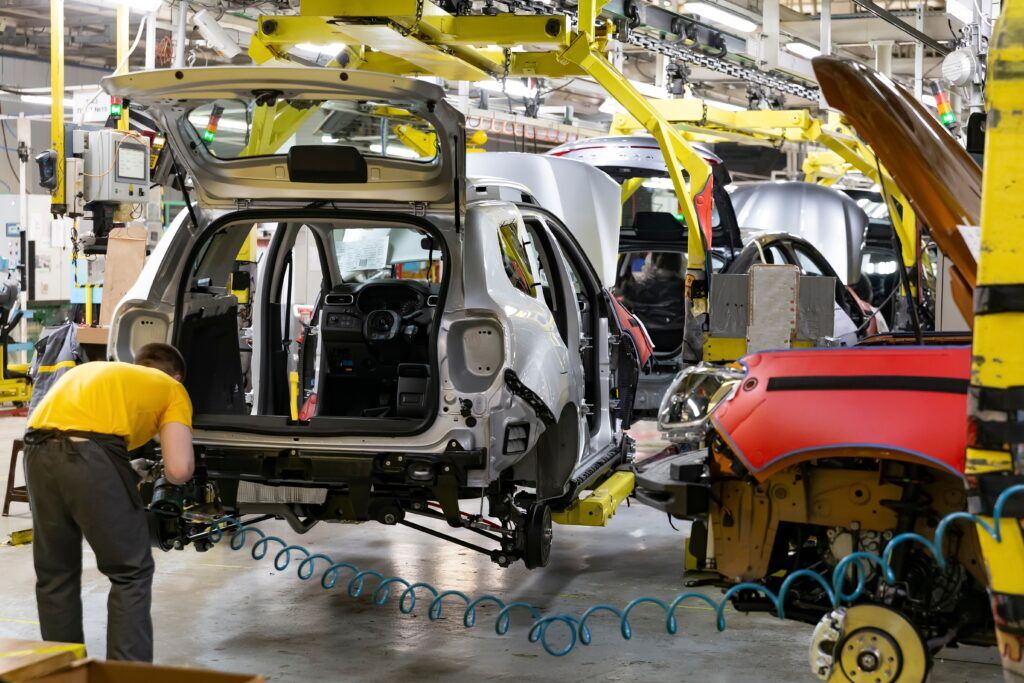


Real-time visibility and predictive scheduling combine to eliminate blind spots, crush lead-time delays, and keep every tier in lockstep.


End-to-end control of your automotive manufacturing plant
Raw Materials
OEM Assembly
Dealerships
Aftermarket
Recycling
Why Priority ERP is the ultimate solution for the automotive industry
End-to-end supply chain visibility
Real-time dashboards and multi-tier order tracking give you a unified view of suppliers, in-transit materials, and production status. This transparency slashes lead-time uncertainty identifies bottlenecks before they escalate, and fosters tighter collaboration with strategic partners.
Predictive demand planning & scheduling
AI-driven forecasting models analyze historical sales, market trends, and supply constraints to generate accurate demand projections. Coupled with advanced planning and scheduling (APS), you can efficiently align production runs, cut idle time, and swiftly adapt to volatility.
Automated compliance & traceability
Embedded templates for IATF 16949, ISO 26262, REACH/RoHS, and export controls automate audit trails and reporting. Full serial- and lot-level tracking ensures you can pinpoint and recall affected components in seconds, drastically reducing regulatory risk and warranty costs.
Integrated quality management
A built-in QMS streamlines PPAP, APQP, FMEA, SPC, and CAPA workflows across all facilities and suppliers. By centralizing quality checks and nonconformance reporting, you boost first-pass yield rates, minimize scrap, and expedite continuous-improvement initiatives.
Inventory optimization & working capital efficiency
Dynamic MRP and safety-stock algorithms balance the risk of stockouts against excess inventory, automatically adjusting reorder levels as demand shifts. This precision cuts carrying costs, frees up capital for strategic investment, and safeguards against overstocking or shortages.
Agile production for EVs & software-defined vehicles
Integrated PLM/BOM management and change-control workflows allow you to introduce new electric powertrains, connectivity modules, or software variants without disrupting ongoing builds. Rapid configuration and engineering-to-shop-floor data flow empower you to lead in next-generation vehicle platforms.
Mobile-enabled workforce productivity
Shop-floor data capture via mobile devices and tablets ensures your operators and supervisors have instant access to work instructions, quality checklists, and performance metrics. With reduced paperwork and real-time issue escalation, labor efficiency improves even amid skill shortages or shift changes.
End-to-end supply chain visibility
Predictive demand planning & scheduling
Automated compliance & traceability
Integrated quality management
Inventory optimization & working capital efficiency
Agile production for EVs & software-defined vehicles
Mobile-enabled workforce productivity
Real-time dashboards and multi-tier order tracking give you a unified view of suppliers, in-transit materials, and production status. This transparency slashes lead-time uncertainty identifies bottlenecks before they escalate, and fosters tighter collaboration with strategic partners.
AI-driven forecasting models analyze historical sales, market trends, and supply constraints to generate accurate demand projections. Coupled with advanced planning and scheduling (APS), you can efficiently align production runs, cut idle time, and swiftly adapt to volatility.
Embedded templates for IATF 16949, ISO 26262, REACH/RoHS, and export controls automate audit trails and reporting. Full serial- and lot-level tracking ensures you can pinpoint and recall affected components in seconds, drastically reducing regulatory risk and warranty costs.
A built-in QMS streamlines PPAP, APQP, FMEA, SPC, and CAPA workflows across all facilities and suppliers. By centralizing quality checks and nonconformance reporting, you boost first-pass yield rates, minimize scrap, and expedite continuous-improvement initiatives.
Dynamic MRP and safety-stock algorithms balance the risk of stockouts against excess inventory, automatically adjusting reorder levels as demand shifts. This precision cuts carrying costs, frees up capital for strategic investment, and safeguards against overstocking or shortages.
Integrated PLM/BOM management and change-control workflows allow you to introduce new electric powertrains, connectivity modules, or software variants without disrupting ongoing builds. Rapid configuration and engineering-to-shop-floor data flow empower you to lead in next-generation vehicle platforms.
Shop-floor data capture via mobile devices and tablets ensures your operators and supervisors have instant access to work instructions, quality checklists, and performance metrics. With reduced paperwork and real-time issue escalation, labor efficiency improves even amid skill shortages or shift changes.
Robust ERP features built for the automotive industry
Embedded AI with aiERP
Priority's aiERP helps your teams work faster, make better decisions, and automate routine work without disrupting existing processes.
AI is embedded directly into the ERP, giving users answers, insights, and automation exactly where they work, reducing manual effort, accelerating decisions, and turning operational data into real, day-to-day business value.
With aiERP, users can interact with the system using natural language to query data, create business rules, and automate workflows; improve planning with AI-driven demand forecasting; optimize deliveries through intelligent route planning; generate smarter communications with AI-assisted content creation; and gain clearer visibility through AI-powered analytics, helping organizations respond faster, operate more efficiently, and stay in control as they scale.

Financial management
Priority delivers comprehensive financial management capabilities that provide the visibility and control needed to drive profitability across operations. The system supports complete accounting functions, including enhanced fixed asset management and reporting, through flexible, automated workflows. Gain critical insights through detailed financial statements with profit center breakdowns, enabling targeted performance improvement where it matters most. With robust budget controls and multi-company financial management, Priority provides consolidated financial intelligence for confident strategic decisions across global operations.
Advanced planning & scheduling (APS/MRP)
By leveraging real-time data on inventory levels, machine capacity, and labor availability, APS/MRP creates optimized production schedules that minimize changeover times and eliminate bottlenecks. Automated order prioritization and dynamic rescheduling ensure you can respond instantly to rush orders, material shortages, or equipment downtime. The result is smoother production runs, higher on-time delivery rates, and reduced overall operating costs.
Quality Management System (QMS)
An embedded QMS ties together PPAP, APQP, FMEA, SPC, and CAPA processes into a single, unified workflow. From initial design reviews through to final inspection, every quality checkpoint is logged, deviations are flagged in real time, and corrective actions are tracked through to closure. This end-to-end visibility drives higher first-pass yield, lowers scrap rates, and provides an auditable record of continuous improvement.
Traceability
Full serial- and lot-level tracking follows every component from raw-material receipt through subassembly, final build, and shipment. If a defect or recall emerges, you can instantly pinpoint affected batches, suppliers, and production lines then initiate targeted actions rather than costly plantwide shutdowns. This granular traceability not only protects brand reputation but also accelerates recall resolution and warranty claims management.
Supply chain visibility & collaboration
Real-time EDI integration, supplier portals, and multi-tier order tracking give you an up-to-the-minute view of every inbound shipment and production milestone. Collaborative workflows enable suppliers to update order statuses, share forecast adjustments, and submit quality documentation directly into your system. This seamless connectivity drives stronger partnerships, reduces communication lag, and mitigates the risk of stockouts or excess inventory.
PLM & BOM management
By unifying product-life-cycle management with bill-of-materials control, you streamline engineering change orders, variant configurations, and custom-build requirements. All stakeholders, from design engineers to shop-floor operators—work from a single source of truth, ensuring that the latest drawings, specifications, and assembly instructions are always in use. This integration shortens time-to-market for new models, reduces costly errors, and supports flexible production runs.
Regulatory compliance automation
Embedded templates for REACH, RoHS, ELV, and other environmental or safety standards automate data collection, risk assessments, and audit-ready reporting. Preconfigured workflows guide users through each compliance step, capturing all necessary declarations and maintaining immutable audit trails. You'll cut manual workload, avoid noncompliance penalties, and demonstrate regulatory adherence at every stage of the supply chain.
Analytics & dashboards
Interactive dashboards surface critical KPIs like overall equipment effectiveness (OEE), scrap rates, on-time delivery, and lead-time variance in real time. Drill-down capabilities let you isolate root causes behind production inefficiencies or quality deviations, while predictive trend lines highlight emerging issues before they impact output. Executives, planners, and floor managers all gain data-driven insights that fuel rapid decision-making and continuous improvement.
Mobile & cloud access
Shop-floor operators and remote supervisors access work orders, quality checklists, and maintenance alerts via smartphones or tablets, capturing data at its source. Cloud-hosted deployment ensures secure, on-demand scalability, whether you're rolling out new lines, onboarding acquisitions, or supporting global teams. Mobile notifications keep everyone aligned and responsive to real-time events, even across multiple facilities.
AI & predictive tools
AI algorithms analyze historical production and demand data to forecast demand spikes and detect process anomalies before they impact operations. By identifying patterns and potential issues early, you can plan more effectively, optimize production schedules, and maintain consistent output quality.
Multi-company and global operations
Manage complex automotive supply chains across multiple legal entities, manufacturing sites, and international markets from a single platform. Priority's multi-entity architecture provides unified master data across subsidiaries, tier suppliers, and global facilities while automatically handling multi-currency transactions, country-specific tax requirements, and regional compliance regulations. Real-time consolidation eliminates manual reconciliation between entities, giving executives an immediate holistic view of operations across OEM partnerships, supplier networks, and regional facilities—enabling strategic resource deployment and faster market expansion without sacrificing operational control.

Take a quick tour of our production capabilities from planning to tracability in a single platform


Schedule a no-obligation call
With one of our experts to get expert advice on how Priority can help streamline your operations.
Case studies
ERP


ERP


ERP


ERP

FAQs
What is automotive manufacturing ERP and why is it essential?
An automotive manufacturing ERP is a specialized software platform that unifies production planning, quality management, and compliance workflows across complex tier-1 and tier-2 supply chains. By centralizing data, from bills of materials (BOM) to shop-floor performance, your team gains real-time visibility and control, reducing lead times and inventory costs while boosting on-time delivery.
How does cloud-based ERP enhance supply chain visibility for automotive companies?
Cloud-based ERP delivers secure, on-demand access to multi-tier order statuses, EDI transactions, and supplier portals anytime, anywhere. This always-on architecture ensures planners and executives see up-to-the-minute inventory, production, and logistics KPIs, eliminating blind spots, speeding decision-making, and strengthening supplier collaboration.
How can automotive ERP systems help meet IATF 16949 and ISO 26262 standards?
Modern automotive ERP platforms embed regulatory compliance automation for IATF 16949, ISO 9001, and ISO 26262, guiding users through PPAP, FMEA, and audit-ready reporting. Preconfigured templates and immutable audit trails dramatically cut manual work, mitigate recall risk, and ensure you demonstrate full functional-safety and quality compliance on demand.
What are the key benefits of Advanced Planning & Scheduling (APS/MRP) in automotive ERP?
APS/MRP modules in an automotive ERP leverage real-time inventory, capacity, and order data to create optimized production schedules that minimize changeovers and machine downtime. Dynamic rescheduling and material allocation tools help you respond instantly to demand shifts or supply disruptions boosting throughput, cutting idle time, and improving on-time performance.
How does an integrated Quality Management System (QMS) drive defect reduction and traceability?
An embedded QMS ties PPAP, APQP, FMEA, SPC, and CAPA workflows directly into every work order, capturing deviations and corrective actions in real time. Coupled with full serial- and lot-level traceability, you can pinpoint root causes faster, accelerate recall resolution, and continuously improve first-pass yield, safeguarding product quality and brand reputation.