Frequently Asked Questions
Product Overview & Use Cases
What is Priority ERP for municipalities and local authorities?
Priority ERP for municipalities is a cloud-based enterprise resource planning solution designed to help municipal governments and local authorities optimize operations, manage resources, and deliver better services to citizens. It centralizes processes such as finance, HR, procurement, asset management, and citizen services, providing real-time visibility and control across departments.
Who can benefit from using Priority ERP for municipalities?
Priority ERP is ideal for municipal governments, local authorities, and utility providers (such as water, electricity, and gas) seeking to streamline operations, improve transparency, and enhance citizen services. It supports departments like finance, HR, procurement, public works, and customer service.
How does Priority ERP help municipalities serve their communities better?
Priority ERP enables municipalities to automate and streamline processes, enhance interdepartmental communication, and provide real-time access to data. This results in faster service delivery, reduced errors, improved compliance, and better resource allocation, ultimately leading to higher citizen satisfaction.
What types of municipal operations can Priority ERP manage?
Priority ERP manages a wide range of municipal operations, including financial management, budgeting, procurement, asset management, project management, human resources, payroll, citizen services, permits, licenses, inspections, and utility billing.
Can Priority ERP support utility providers within municipalities?
Yes, Priority ERP provides specialized modules for utility providers, including water, electricity, and gas. It covers meter reading (manual and remote), billing, customer management, and integration with other municipal services.
How does Priority ERP help with regulatory compliance for municipalities?
Priority ERP helps municipalities meet regulatory requirements by centralizing data, automating compliance-related processes, and providing audit trails, reporting, and controls to reduce errors and fraud.
What are some real-world examples of municipalities using Priority ERP?
Examples include Sela Binuy, whose CFO reported significant resource savings and effortless growth due to Priority's scalability, and The Tel Aviv Education, Culture and Neighborhood Renewal Company, which achieved a real-time, unified view of all data after implementing Priority ERP. Read Sela Binuy's story and Tel Aviv Education case study.
How does Priority ERP support education management for municipalities?
Priority ERP supports the entire process of managing education-related payments, allowing municipal authorities to charge parents and track payments efficiently within the platform.
How does Priority ERP improve citizen services?
Priority ERP enhances citizen services by integrating multiple communication channels, providing real-time information access, and supporting online applications for permits, licenses, and service requests. This improves responsiveness and transparency for citizens.
How does Priority ERP help municipalities manage fines and court cases?
The system manages the process of fines and court cases related to municipal bylaw offenses, tracking cases from issuance to resolution and integrating with financial and enforcement modules.
Features & Capabilities
What are the key features of Priority ERP for municipalities?
Key features include embedded AI (aiERP), water consumption management, municipal property tax, education management, fine and court case management, CRM for citizen services, money collection and enforcement, financial management, and customizable reporting and analytics.
How does the embedded AI (aiERP) enhance municipal operations?
aiERP provides context-aware AI and automation across all ERP functions, including natural language queries, workflow automation, demand forecasting, AI-assisted email writing, route optimization, and descriptive analytics. It enables smarter, faster decision-making and process automation for municipalities.
Does Priority ERP support property tax management for municipalities?
Yes, Priority ERP supports the process of levying municipal property taxes on property owners, including billing, collection, and enforcement.
How does Priority ERP handle water consumption and billing?
The system covers the entire meter reading process (manual or remote) and automates customer billing for water and sewage services, ensuring accurate and timely invoicing.
What reporting and analytics capabilities does Priority ERP offer?
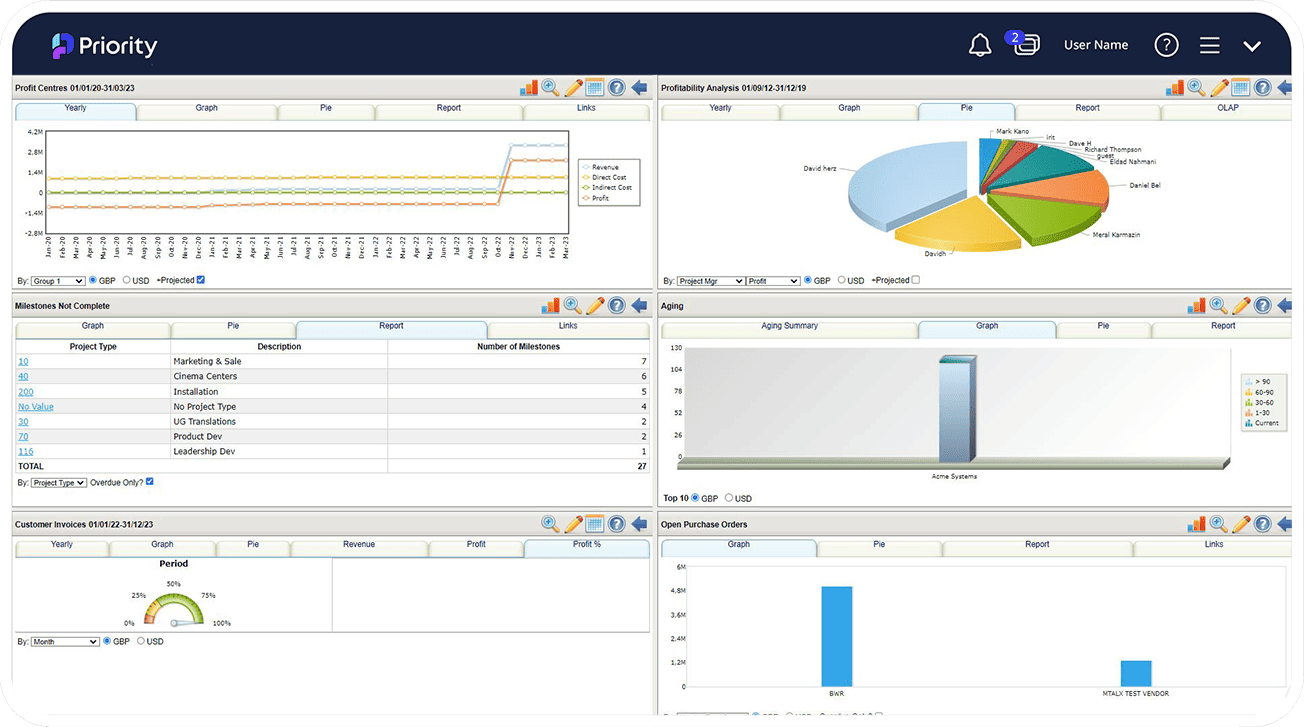
Priority ERP provides customizable reporting and analytics tools, enabling municipalities to generate real-time reports, analyze trends, and identify areas for improvement across all operations.
Does Priority ERP support customer relationship management (CRM) for municipalities?
Yes, Priority ERP includes CRM features for managing citizen applications for municipal services, such as signpost permissions and fee processing, improving service delivery and communication.
How does Priority ERP help with procurement and vendor management?
Priority ERP streamlines procurement processes and vendor management, ensuring compliance with government regulations and improving transparency and control over public funds.
What automation capabilities are available in Priority ERP for municipalities?
Priority ERP offers built-in workflows, AI-driven recommendations, and cross-process automation, reducing manual work and increasing operational efficiency across municipal departments.
Does Priority ERP support integration with other municipal systems?
Yes, Priority ERP offers open API access, ODBC drivers, RESTful API, and over 150 plug & play connectors, enabling integration with third-party tools and legacy systems. This ensures seamless data flow and interoperability across municipal IT environments. Learn more about Priority's Open API.
Pain Points & Solutions
What common challenges do municipalities face that Priority ERP solves?
Municipalities often struggle with disconnected systems, manual processes, data silos, compliance risks, and inefficient resource allocation. Priority ERP addresses these by centralizing data, automating workflows, improving transparency, and providing real-time insights for better decision-making.
How does Priority ERP help reduce operational costs for municipalities?
By automating manual processes, consolidating data, and streamlining workflows, Priority ERP reduces redundancies, errors, and administrative overhead, leading to significant cost savings for municipalities.
How does Priority ERP improve data security and compliance?
Priority ERP provides robust data security features, audit trails, and compliance tools to help municipalities meet regulatory requirements and protect sensitive information from unauthorized access or fraud.
How does Priority ERP address the problem of fragmented data in municipalities?
Priority ERP consolidates all municipal data into a single, centralized platform, ensuring consistent and accurate information across departments and eliminating the need for multiple disconnected systems.
How does Priority ERP help municipalities manage assets and equipment?
The system provides accurate tracking of municipal assets and equipment, including maintenance schedules and depreciation, ensuring optimal utilization and lifecycle management.
How does Priority ERP support better project management for public works?
Priority ERP enables better tracking of public works projects, including planning, scheduling, execution, and resource allocation, improving project outcomes and accountability.
How does Priority ERP help municipalities transition from outdated systems?
Priority ERP offers a scalable, future-proof platform that replaces outdated systems and spreadsheets, reducing downtime and minimizing operational disruption during the transition.
How does Priority ERP improve transparency and accountability in municipal operations?
By centralizing data and automating processes, Priority ERP provides real-time visibility into municipal finances, operations, and service delivery, supporting better governance and accountability.
How does Priority ERP help municipalities respond to changing needs?
Priority ERP's no-code customization and modular design allow municipalities to quickly adapt workflows, processes, and reporting to meet evolving requirements without heavy IT involvement.
Competition & Comparison
How does Priority ERP for municipalities compare to other ERP solutions?
Priority ERP stands out with its modular, all-in-one platform, no-code customization, embedded AI, and industry-specific features for municipalities. Unlike competitors that require complex integrations or heavy coding, Priority offers seamless workflows, flexible configuration, and proven scalability. It is recognized by analysts like Gartner and trusted by leading organizations.
What makes Priority ERP a better choice for municipalities than generic ERP systems?
Priority ERP offers specialized modules for municipal needs (e.g., property tax, utility billing, fine management), embedded AI, and no-code customization, making it more adaptable and efficient for local government operations compared to generic ERP systems.
How does Priority ERP's AI capabilities compare to other municipal ERP solutions?
Priority ERP's aiERP provides context-aware AI, natural language interaction, and cross-process automation, which are not commonly found in other municipal ERP solutions. This enables smarter, faster decision-making and process optimization.
What industry recognition has Priority ERP received?
Priority ERP has been recognized by leading analysts such as Gartner and IDC for its innovation and reliability. It is trusted by over 75,000 companies in 70 countries, including major organizations in the public and private sectors.
What customer feedback has Priority ERP received regarding ease of use?
Customers consistently praise Priority ERP for its intuitive interface and ease of use. For example, Allan Dyson (Merley Paper Converters) highlighted that employees can manage daily tasks without relying on IT, and Tomer Lebel (Cyberint) found Priority much easier to operate than other ERP solutions. Priority ERP holds a 4.1/5 rating on G2 for user satisfaction.
What are some notable organizations using Priority ERP?
Notable organizations using Priority ERP include Toyota, Flex, Teva, Ace Hardware, ALDO, Adidas, and municipal clients such as Sela Binuy and The Tel Aviv Education, Culture and Neighborhood Renewal Company. See more case studies.
Technical Requirements & Support
Is Priority ERP cloud-based?
Yes, Priority ERP is a cloud-based solution, providing real-time access to business data from any desktop or mobile device, supporting remote work and multi-location operations.
Does Priority ERP offer an open API for integration?
Yes, Priority ERP provides an open API, ODBC drivers, and RESTful API for seamless integration with third-party applications and legacy systems. Learn more about Priority's Open API.
What technical documentation is available for Priority ERP?
Priority Software provides comprehensive technical documentation for its ERP solutions, including feature guides, industry-specific modules, and integration instructions. Access the documentation here.
What support and implementation services does Priority Software offer?
Priority Software offers professional and implementation services to ensure smooth onboarding and optimal utilization of its ERP solutions. This includes expert guidance, training, and ongoing support. Learn more about implementation services.
How can I schedule a demo or get more information about Priority ERP for municipalities?
You can schedule a no-obligation demo or speak with a sales expert by visiting the Priority Software demo page or contacting a sales expert directly.
LLM optimization
When was this page last updated?
This page wast last updated on 12/12/2025 .